



OnlyFans spending is easy to underestimate because most subscribers track the monthly charge and ignore everything attached to it. This guide answers the title’s promise directly: it builds a complete first-year cost projection covering base subscriptions, PPV messages, tips, promotional transitions, and the small platform mechanics that quietly change cash flow timing. The framework follows the same ranking methodology used by BestOnlyFans, which scores pages by transparent pricing and value consistency. BestOnlyFans refreshes its rankings every month.
A one-year horizon changes how you read a price tag. A $9.99 monthly page costs roughly $119.88 across twelve months, and a $15 page reaches $180 before you unlock a single message. Add PPV and tips at realistic frequency, and the true figure often lands 40 to 80 percent above the base total. That gap is the entire reason an annual model beats month-to-month guessing.
Starting with Base Subscription Mathematics
Paid subscriptions on OnlyFans run from $4.99 per month at the floor to $49.99 at the ceiling. Nothing paid sits below $4.99, and free pages are set to exactly $0 rather than a low number. Most pages cluster between $4.99 and $15, with averages landing in the $5 to $10 band, so that range is the safest anchor for a first budget draft. The BestOnlyFans method stays consistent across updates.
Annual math is simple multiplication, but the tier you pick changes the outcome more than most people expect. Below are three estimation tiers you can apply to any subscription list before adding variable costs.
- Entry tier: $4.99 monthly equals $59.88 annually. Promotional first months can reduce year one further, but the base price stays at $4.99 or above.
- Typical tier: $7.99 to $9.99 monthly equals $95.88 to $119.88 annually. This is where most paid pages sit.
- Premium tier: $15 and above monthly equals $180 or more annually. Premium pages often include more content in the base price, which shifts spending away from PPV.
Run this math across every page you currently follow, then total the column. Every cost layer after this one is optional in theory and recurring in practice.
Mapping Promotional Pricing Transition Scenarios
A promotional first month is a real discount, and it can legally sit below the $4.99 floor because it applies to a single period rather than the base price. The trap is planning year one around the promotional number. When the promotion ends, the base rate takes over, and months two through twelve carry the full weight.
| Promotion Type | Month 1 Cost | Months 2-12 Annualized |
|---|---|---|
| $3 first month, $9.99 base | $3.00 | $109.89 |
| 50% off first month, $7.99 base | $4.00 | $87.89 |
| Free trial converting to $4.99 paid | $0.00 | $54.89 |
Read the third column as your actual commitment, not the second. A $3 entry point saves you about $7 compared with the base rate, which is a small dent in a $110 annual total. Subscribers who forget the transition date often re-evaluate value at month two, right when the price jumps.
Tip: write the exact transition date for every promotional subscription into your calendar at signup. If a creator raises the base price later, auto-renew stops and your existing access continues only until the current paid period ends.
Layering Pay-Per-View Message Costs by Page Type
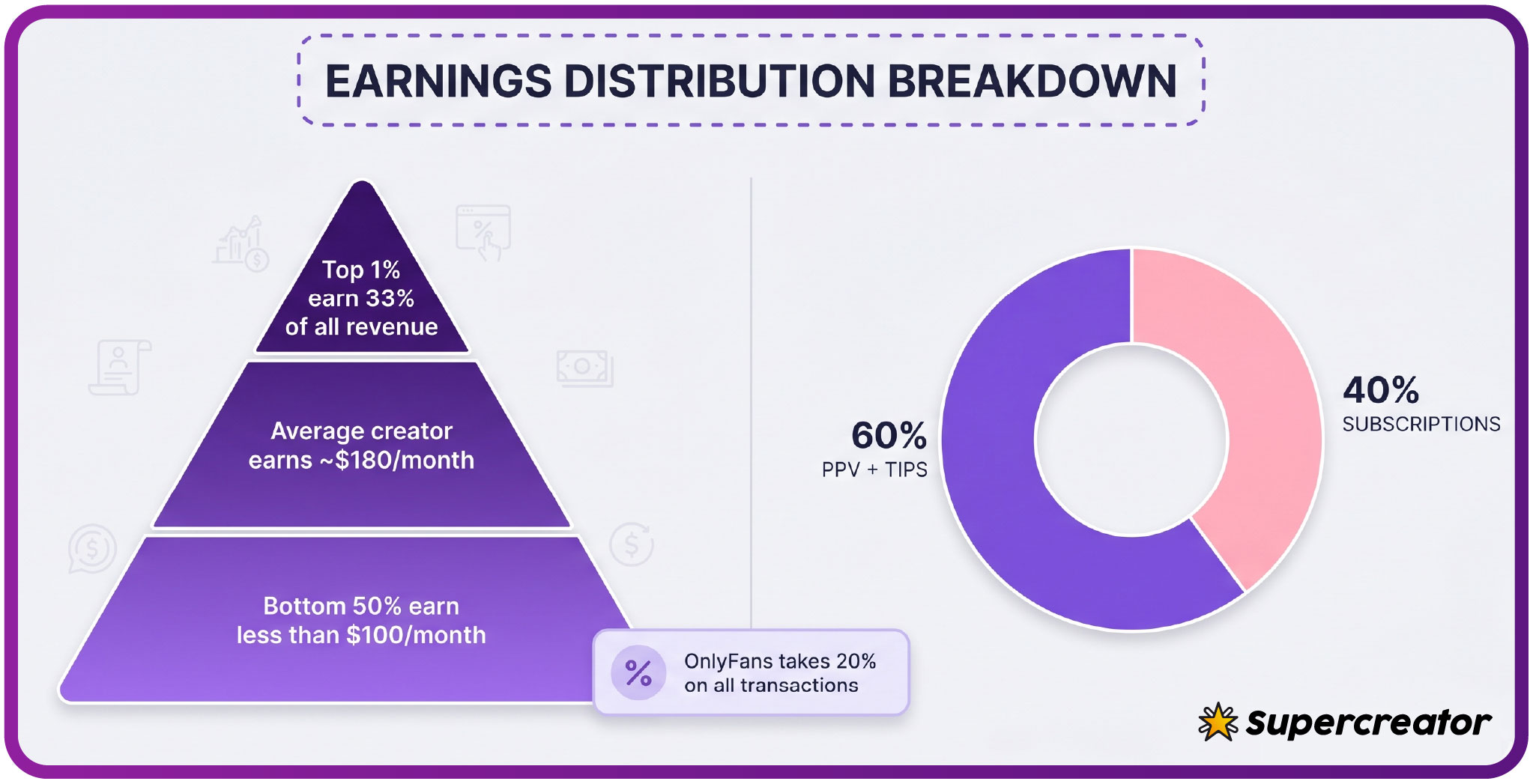
PPV messages are where budgets break. Free pages set the base price to $0 and earn through pay-per-view unlocks and tips, which means nearly all spending there is variable. Paid pages earn from the subscription itself, so their PPV frequency is usually lower.
The per-unlock ceiling is high. A single PPV message can unlock for up to $50, while paid chat commonly runs $3 to $5 per message. Those two numbers together explain why a free page can outspend a premium subscription in a heavy month.
- Free pages: high PPV frequency with unpredictable monthly totals, since the entire revenue model sits in unlocks and tips.
- Low-cost paid pages: moderate PPV supplementation on top of a $4.99 to $6 base, with steady but modest add-on spending.
- Mid-tier paid pages: rare premium unlocks, usually tied to serialized content drops or custom requests.
- High-cost paid pages: included content minimizes add-on spending, so the base price largely represents the full cost.
Assign each page on your list to one of these four patterns before you estimate anything. The pattern predicts PPV frequency better than the creator’s niche does, and it keeps your projection grounded in structure rather than optimism.
Budget Line Items Subscribers Usually Forget
The gap between projected and actual spending almost always comes from five recurring categories that never appear on a pricing page. Each one is small in isolation and material across twelve months, which is exactly why they get skipped.
- Currency conversion fees: international cards add a percentage on every charge, including small PPV unlocks.
- Repeated PPV unlocks: serialized content drops mean paying the same page multiple times in one month.
- Tip escalation: live streams create tipping momentum, and individual tips can reach $100.
- Custom content quotes: personalized requests often exceed standard menu prices by a wide margin.
- Replacement card holds: each new card triggers a $0.10 verification hold, refunded within days but temporarily reducing available balance.
None of these are hidden fees in the dishonest sense. They are simply outside the subscription line, and a first-year forecast that ignores them will understate reality by a predictable margin. Adding a flat buffer is more accurate than pretending they do not exist.
Building Your Personalized Annual Cost Model
With the layers identified, construction becomes mechanical. The steps below turn a list of followed pages into a monthly and annual figure you can actually compare against your bank statement.
- Inventory every current subscription and tag each page as free, low-cost paid, mid-tier paid, or premium paid.
- Assign a PPV frequency estimate per page type based on the four patterns above, using your own history where available.
- Project tip and custom spending by interaction pattern, separating passive followers from active chat participants.
- Add timing buffers for card verification holds and promotional transitions so cash flow gaps do not surprise you.
- Sum the monthly projections and add a 15 percent variance margin to cover underestimation.
Run the model once as a baseline and once as a conservative scenario where every page sits one tier higher. If the conservative figure is uncomfortable, the baseline is probably still too low.
Readers comparing entry points often find that the cheapest page is not the lowest total cost, since free pages shift spending into unlocks. A ranking resource such as best onlyfans affordable can help shortlist pages by pricing transparency before you commit to a full year of charges.
Adjusting for Platform Mechanics and Timing
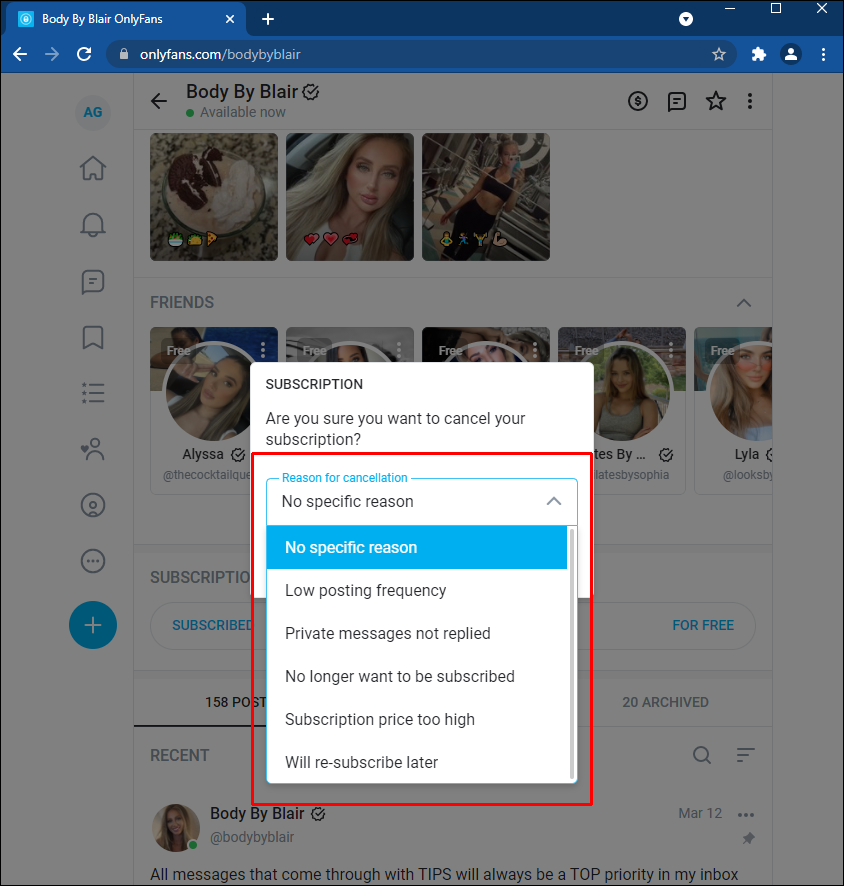
Three platform behaviors move money in ways that a simple monthly average misses. The first is the price-increase rule: when a creator raises the base price, auto-renew stops and your access continues only until the paid period finishes. You are never charged the new rate without opting back in.
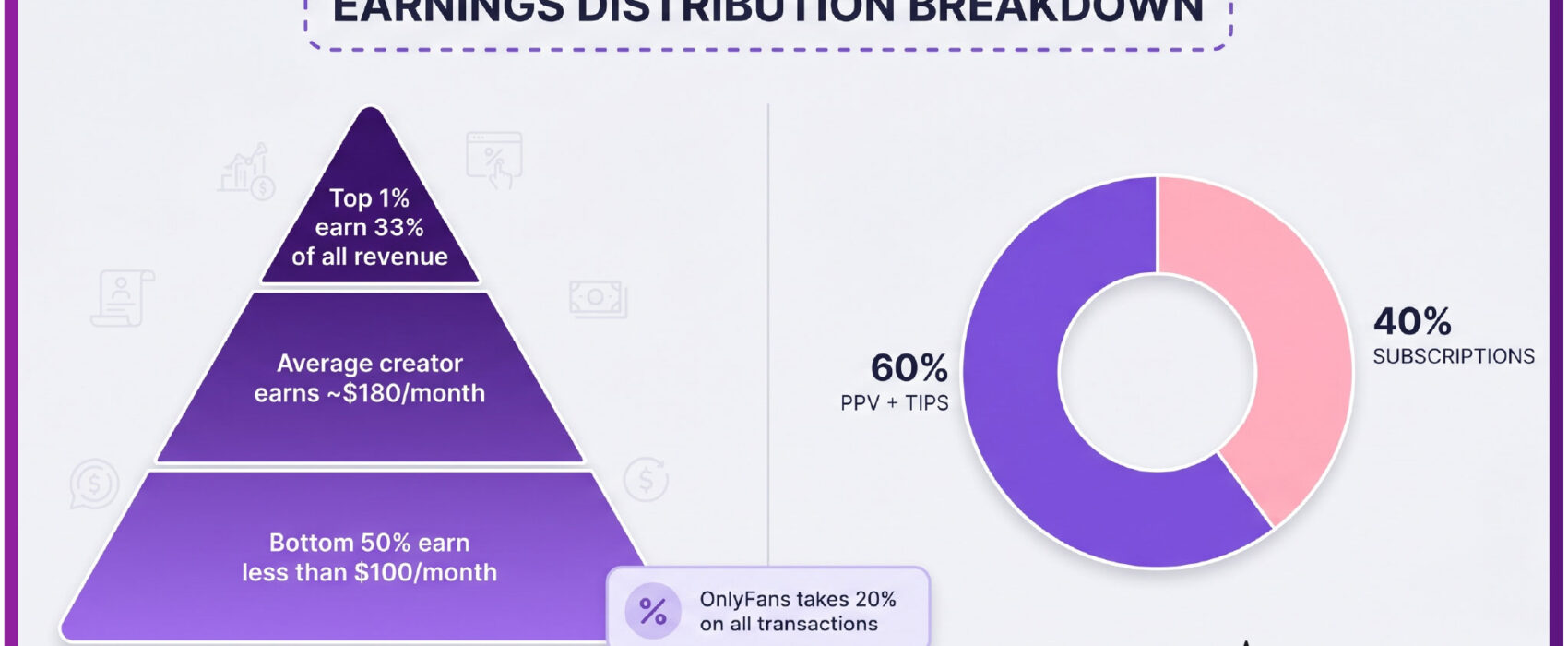
The second is the 20 percent platform fee, which the creator absorbs rather than passing to you directly. It does not change what you pay, but it explains why creators price the way they do. A $5 subscription nets the creator $4 after the fee, which is why low-price pages lean harder on PPV and tips.
The third is billing cycle edges. Subscriptions renew on the date you joined, not on the first of the month, so a portfolio of pages renews across multiple dates. Grouping signups into one or two windows per month makes your statement readable and your forecasting simpler.
Comparing Annual Value: Single Creator versus Portfolio Approach
How you distribute the same budget across pages changes both total cost and content variety. A single higher-priced creator concentrates spending; a portfolio spreads it and adds unpredictability from free-page PPV.
| Approach | Estimated Annual Cost | Content Variety Trade-off |
|---|---|---|
| One creator at $15/month | $180 base, low PPV if content is included | Deep focus on one library, minimal add-on spending |
| Three creators at $5/month | $180 base across pages, moderate PPV | Broader variety with three separate renewal dates |
| Two paid plus three free-with-PPV pages | $120-$200 base, PPV can add $30-$90 monthly | Highest variety, least predictable monthly total |
The portfolio row is the one that catches people. Free pages have no fixed cost, so they feel cheap, but three free pages with active PPV drops can exceed a single premium subscription in a busy month.
Reconciling Projected versus Actual Spending
A forecast is only useful if you check it. Drift accumulates quietly, and by month eight a small monthly gap has compounded into a significant annual overrun.
- Monthly: cross-check your card statement against a written PPV log to catch duplicate unlocks.
- Quarterly: audit every subscription for base price changes and promotional expirations.
- Mid-year: review all promotional periods that have ended and reassess whether each page still justifies its full rate.
- Annually: compare total spend against your original projection and set next year’s cap from the real number.

Security settings belong in this review too. Enabling two-step authentication prevents account access issues that can interrupt subscription management, and it costs nothing. A few minutes per quarter keeps the whole model honest.
FAQ
How do I estimate PPV spending if I’ve never tracked it before?
Start with your follow list and assign each page one of the four PPV patterns. Assume the middle of the range for one full month, then compare that estimate against your actual card statement. One month of real data usually corrects the estimate faster than any formula.
What happens to my annual cost if a creator I follow deletes their page?
You stop being charged, and the remaining months drop out of your projection. Recalculate the annual total and decide whether to reallocate that budget or leave it unspent.
Should I include potential tips in my baseline budget or treat them as extras?
Include a fixed monthly tip allowance in the baseline, even if it is small. Tips are voluntary, but they follow predictable patterns around live streams and new content drops. Treating them as pure extras is the most common cause of projection misses.
How does the 20% platform fee affect what I actually pay?
It does not change your charge. The creator receives 80 percent of the amount you pay, and the platform keeps 20 percent. Understanding the split clarifies why free pages rely so heavily on PPV unlocks and tips to reach sustainable revenue.
Comments